






Understanding Rod Ends: Choosing the Right Rod End Manufacturer for Your Spherical Bearings

Selecting the ideal rod end manufacturer is a critical decision that can significantly impact the performance, durability, and reliability of your spherical bearings. Whether you’re designing high-precision machinery, heavy-duty equipment, or aerospace components, the quality and engineering expertise of the manufacturer play a pivotal role in ensuring optimal functionality. This article will guide you through the essential factors to consider when choosing a rod end manufacturer, equipping you with the knowledge to make an informed decision. From material selection to manufacturing standards, we’ll explore the key criteria that set reputable manufacturers apart, helping you find a partner that meets the specific demands of your application.
The Importance of Selecting a Reliable Rod End Manufacturer
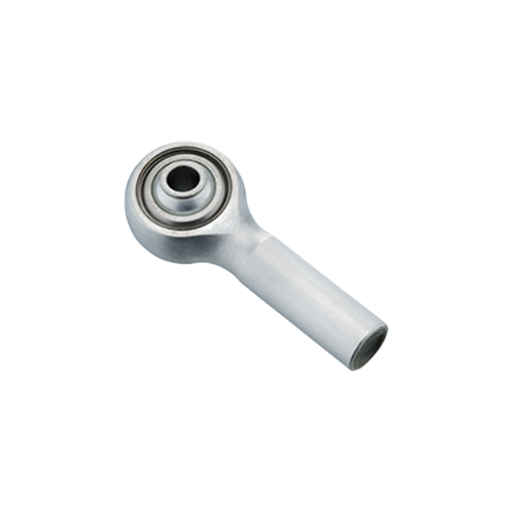
Impact on Performance and Safety
Selecting a good-quality rod end manufacturer can directly affect an application from the standpoint of performance and safety. Rod ends are essential mechanical components; they support loads, allow for the transfer of motion, and often need to operate in harsh conditions. This risk of failure is critical in aerospace, automotive, and heavy machinery industries, where failure of one component can cause system-wide failure to occur or possibly create a hazardous situation.
High-performance rod ends will perform consistently if manufactured with precision, thereby reducing wear and aging of the equipment. By following industry best practice and standards, such as ISO specifications, a manufacturer will deliver components that are tested in all respects for material composition, load-bearing capability, and fatigue resistance. This produces the end product to maintain perfect mechanical performance while lessening downtime counts in maintenance or replacement terms.
Safety shall be the other paramount concern. Poor manufacturing processes lead to rod ends failing under stress, either causing accidents or damaging expensive property. Credible manufacturers that invoke modern materials of construction, such as aircraft-grade steel or specialized alloys, and testing methods to ensure compliance with safety standards, enable manufacturers to partner with these manufacturers and guarantee that their mechanical systems are safely working in all conditions specified.
Longevity of Machinery and Equipment
Two significant factors faced by machinery and equipment affecting their longevity are the quality of components, the maintenance schedule, and the working conditions. The best quality materials and exact engineering increase machinery durability. Components meant for bearings, seals, rod ends, etc., should be made according to high manufacturing specifications so that they can withstand the stresses and wear enacted every day during operations and therefore almost never fail prematurely.
Maintenance time is meant to avert minor faults from growing into costly repairs or irreversible damage. Proper lubrication, cleaning, and replacement of worn parts; in short, preventive maintenance will very much extend the working life of any machine. Waiting as long as possible between services can be a good practice, but service intervals are ideally set by the manufacturer and then implemented by competent technicians who perform careful inspections to ascertain the state of the machine.
Environmental and working conditions also affect the durability of the equipment. Machinery and equipment subjected to extremes of temperature, moisture, or chemical attack need special materials and coatings to withstand such severe exposure. At the same time, equipment used within the designed load limits and by usage instructions causes very little unnecessary stress to its members. This helps retain the functional integrity of its members and thus helps in effective performance even after considerable periods together.
Types of Rod Ends: Structure, Materials, and Design Variations
Common Materials Used in Rod Ends
Rod ends are manufactured from multiple materials depending on the application, performance, and environmental factors. Some of the commonly applied materials are:
- Carbon Steel: Carbon steel is often utilized for its high strength and stiffness. It is suitable for applications subjected to mechanical stress and heavy loads. Such rod ends are customarily zinc-plated or otherwise coated against corrosion to extend their service life.
- Stainless Steel: Having the highest level of corrosion resistance, stainless steel is the material of choice for rod ends operating in an environment where moisture, chemicals, or even temperature extremes are prevailing factors. It is certainly the long-term preferred option in marine, food processing, and chemical industries due to its resistance to oxidation and wear.
- Alloy Steel: Alloy steel is chosen when further mechanical properties such as increased tensile strength or fatigue resistance are required. This is a high-durability material provided by the addition of chromium, molybdenum, or nickel into it, and gives better performance in the high-stress environment of aerospace or automotive manufacturing.
- Aluminum Alloys: Aluminum rod ends, being lightweight and corrosion-resistant, are widely used under conditions where a reduction of overall structure weight is of consequence, i.e., aerospace or performance sports equipment. Their strength is marginally below that of steel, though they still bear the load for moderate-duty tasks; in fact, they are rather easy to machine.
- Bronze or Brass: For low friction and self-lubricating properties; bronze- or brass-made rod ends find some peculiar uses. These materials perform excellently in systems where high requirements for rotational movement or electrical conductivity exist, such as are found in electrical applications or pivots with limited access to maintenance.
Through the application of advanced material science and manufacturing technologies, today, rod ends are engineered to meet a particular industry’s demands with a balance between strength, weight, and resistance to the elements. The choice of material directly affects the performance and service life of the rod ends, making it vital to analyze the application requirements during the selection process.
Comparative Analysis of Standard vs. Custom Rod Ends
A brief comparison between standard and custom rod ends may be as follows: Standard rod ends are mass-produced, less expensive, and readily available, whereas custom rod ends address unique specifications.
|
Key Point |
Standard |
Custom |
|---|---|---|
|
Cost |
Lower |
Higher |
|
Availability |
Immediate |
Longer lead time |
|
Flexibility |
Limited options |
Fully customizable |
|
Material |
Common materials |
Exotic materials |
|
Application |
General use |
Specialized needs |
Applications of Rod Ends Across Various Industries
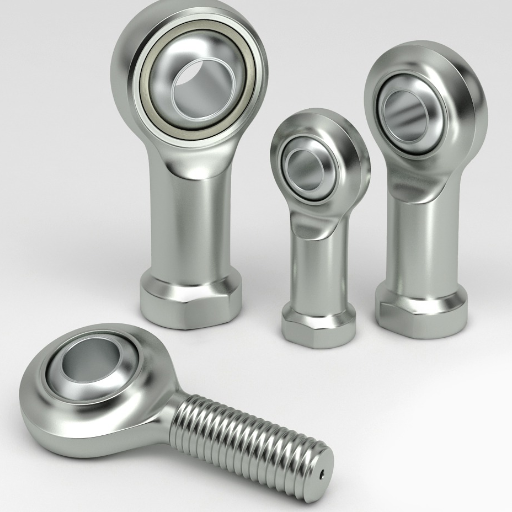
Automotive Industry Applications
The rod ends find vital applications in numerous automotive systems, whereby their reliability and efficiency have paramount importance. The components can be expected to be charged with diverse loads or motion and may have to bear different environmental conditions in critical vehicle applications. Here is an elaborate list of five Key Automotive Applications of Rod Ends:
- Steering Linkages: Rod ends are mainly used in steering systems for the precise control of motion and compensation for some angular misalignment, permitting smooth, responsive, and precise steering essential for vehicle handling and safety.
- Suspension Systems: Used in both independent and solid axle suspensions, rod ends maintain stability and comfort during driving. Their ability to withstand dynamic forces and vibrations makes them stand up to all the punishing road conditions.
- Brake Systems: Rod ends are used in the high-performance brake systems, particularly those for racing and heavy-duty vehicles, wherein their strength and precision become the critical attributes needed to render reliability under heavy deflections.
- Throttle Linkages: Rod ends are found in throttle control systems to ensure smooth and dependable operation. Fast and accurate control response is essential for performance and fuel economy.
- Transmission Linkages: They must connect the shifting mechanisms and make sure gear changes are performed precisely and securely. Sturdy rod ends in transmission systems lead to further efficiency and longevity of the entire drivetrain.
Specific requirements of each application define the material and construction considerations in terms of applied environmental elements, load magnitude, and frequency of movement. The technical design of rod ends for automotive applications reflects the industry’s consideration towards safety, precision, and durability.
Aerospace Industry Requirements
Rod end bearings in the aerospace industry bear the most stringent performance and quality requirements within any industry. These components are designed in certain instances to withstand extreme operating conditions of certain temperature ranges, with extreme vibration levels, plus loads of great magnitudes. Some typical aerospace applications are flight control linkages, controls for landing gear, and engine mount systems, all of which require extreme precision and reliability.
To satisfy such demands, aerospace rod ends are manufactured with very advanced materials, such as stainless steels that resist corrosion, titanium alloys, or composite materials, able to withstand corrosive environmental conditions and long operational life. In addition, these rod ends usually bear a liner of solid lubricant or a dry film lubricant, allowing for the elimination of maintenance and reducing wear.
These tests include fatigue tests, vibration resistance tests, and performance tests during service life. Assurance of quality of manufacture and in-process inspection render every rod end to meet the stringent criteria for airworthiness and system reliability that further enhance safety in aerospace applications. Required for airworthiness and system reliability, reinforcing safety in aerospace applications.
Use in Agriculture and Heavy Machinery
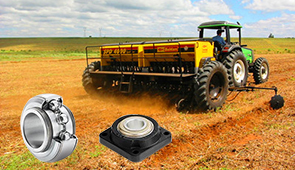
Rod ends are of utmost importance in the functioning and refinement of agricultural and heavy machinery equipment as they compose the load-bearing members, also transfer motion, and involve alignment functions in various instances. These spherical bearing joints are installed in hydraulic cylinders, steering linkages, and pivot points in those mechanical parts. Smooth mechanical movements are subjected to high stress under varying environmental conditions.
Rod ends for agricultural applications are expected to withstand harsh conditions such as dirt, moisture, and temperature extremes while rendering reliable service. Several advanced sealing technologies are employed to maximize the life of these rod ends, coupled with corrosion-resistant coatings to lessen maintenance requirements. In the case of heavy machinery applications, furthermore, it is important that they withstand extremely high loads and offer vibration resistance, thus ensuring high performance, reduced operational downtime of units such as excavators, loaders, and tractors.
Continuous advancements in materials engineering now endow rod ends with increased wear resistance while also lessening the amount of lubrication required through the use of hardened steel, self-lubricating polymers, and other such innovative materials. Whole new levels of confidence in maintaining sustainability and efficient output of both manufacturers and operators can thus be achieved through the integration of Finite Element Analysis (FEA) and thorough testing procedures to adhere to strict mechanical performance standards for rod ends used in these industries.
Evaluating Quality and Performance of Rod Ends
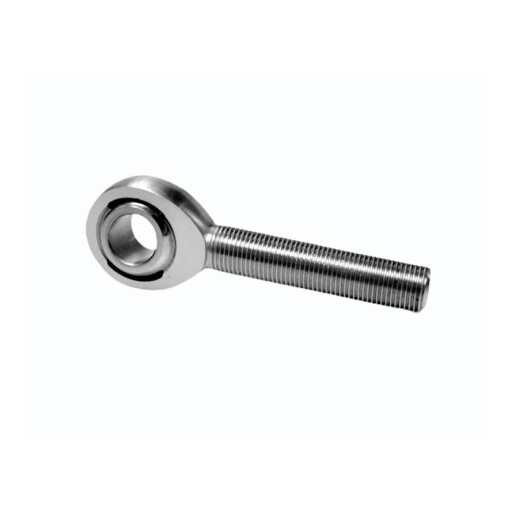
Assessing Durability and Load Capacity
Primary aspects affecting the durability and load capacity of rod ends are material properties and their ability to resist dynamic stresses under varying operational conditions. High-strength alloys like heat-treated carbon steel or stainless steel are best suited to maximize tensile strength and service life. To further enhance wear and corrosion resistance under functioning conditions, surface treatments may be applied on different designs, such as nitriding or chrome plating.
These advanced methods of stress testing and analysis, such as fatigue testing and cyclic load analysis, are also important in establishing mechanical endurance for rod ends. Under simulated working conditions, components are subjected to repetitive forces and fluctuating loads to ensure they maintain their structural integrity. The outcomes of such tests are generally plotted on S-N curves, i.e., Stress vs. Number of cycles, to obtain data on fatigue life and limit of failure.
Load capacity could be improved by way of precise ball and socket assemblies, which provide for a smooth and even distribution of loads. These precision components reduce uneven stress concentrations, which are generally where cracks start and material fatigue takes place. Such evaluations ensure that rod ends satisfy and usually exceed the stringent requirements of industries such as aerospace, automotive, and heavy machinery.
Resistance to Wear and Tear
Rod ends are engineered to be highly reliable in applications needing extreme durability and wear resistance. One of the primary reasons for their excellent wear resistance is the application of advanced surface treatments such as hard chrome plating or nitriding. These surface treatments induce extremely high hardness in the contact surface, which in turn minimizes friction with wear and degradation over extended periods. In addition, having a self-lubricating liner type to reduce metal-to-metal contact further extends the life of the rod end.
There have been great advances in material science, which also help improve wear resistance. For instance, heat-treated steel alloys can improve toughness and fatigue performance in cyclic loading conditions. These, along with the enhancements in manufacturing tolerances, ensure that the rod ends remain fully functional in extremely high-stress environments.
Wear simulation test analyses have demonstrated significant reductions of friction coefficients and losses in the surface material level, depending on the application of these advanced surface treatments. The test outcomes justify the need to employ advanced materials and processes to enhance durability, thereby rendering rod ends necessary for aerospace, defense, and highly demanding industrial machinery.
The Role of Certifications and Standards
Certifications and standards determine the qualities needed to assure the quality, reliability, and safety of rod ends used in critical applications. Benchmarks of this nature create a uniform set of criteria in terms of design, manufacturing process, and testing method, allowing for compliance with industry requirements and, thus, the overall performance of the product. By being certified and/or meeting a recognized standard, manufacturers can show that their manufacturing is willing to offer only high-certification-grade components adapted for use in demanding environments. These include five important certifications and standards affecting the rod end:
- AS9100 (Aerospace Quality Management System Standard): In quality management systems, this standard concentrates on those aspects that are important specifically in the aerospace and defense sectors, focusing on reliability, traceability, and compliance with rigorous safety requirements.
- MIL-SPEC (Military Specifications): Such specifications are laid down by the US Department of Defense to ensure that the components, like rod ends, are capable of meeting high standards for durability, performance, and environmental resistance as required by defense applications.
- ISO 9001 (Quality Management Systems – Requirements): An internationally recognized standard that lays down the criteria in quality management systems for all industries in which they operate. This is to ensure the consistency of product quality and enhancement through continuous improvement.
- NADCAP (National Aerospace and Defense Contractors Accreditation Program): Stallways under NADCAP for surface treatments gives assurance that the surface treatment is conducted according to strict specification requirements of the aerospace and defense industries.
- ASTM Standards (American Society for Testing and Materials): ASTM follows standards of materials and testing procedures and mechanical properties relevant to the operation and safety of the rod ends.
These certifications and standards ensure high performance and seamless production by bringing together international and mission-critical requirements that allow manufacturers to achieve seamless integration into advanced mechanical and structural systems.
Current Market Trends in Rod Ends Manufacturing
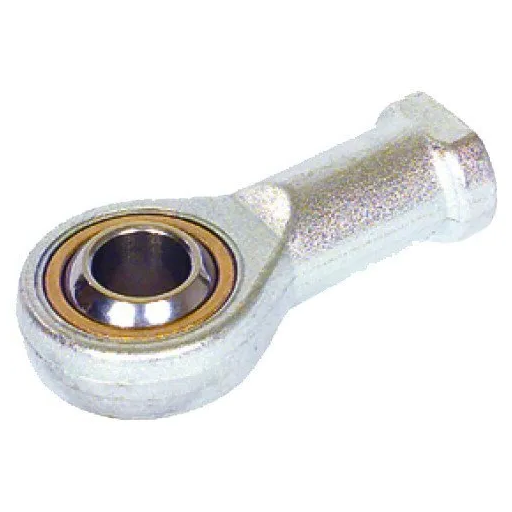
Growing Demand for Custom and Precision-Engineered Solutions
The rod end manufacturing industry is undergoing a paradigm shift as a result of a growing demand for custom and precision-engineered solutions. This demand arises from changing needs in sectors like aerospace, automotive, and heavy machinery, where components must be made with strict specifications to guarantee the best performance, safety, and durability. As a result of this, manufacturers are looking further into their advanced design capabilities and the latest manufacturing techniques to make rod ends capable of being customized for particular applications.
In my view, this increasing demand for such solutions can be attributed to the growth in technological innovations and the complexity of mechanical systems. Industries in the present day require components that can endure specific environmental conditions, load capacities, and dynamic movements. By way of example, in aerospace, they need lightweight yet strong materials, while construction machinery calls for rod ends that could sustain heavy loads and repeated use. To satisfy such varying demands, I would suggest focusing on collaborative efforts, leaning towards manufacturers and end-users during design and engineering phases to ensure accuracy and reliability.
The market is also becoming increasingly embedded with digital technology for customization, including CAD software and simulation tools to advance the process. Using these technologies allows manufacturers to enhance the design of a product and simulate its performance in particular stress scenarios to minimize development time. This combination of technologies, alongside a customer-focused tactic, is modernizing the industry into a highly agile and responsive sector that is able to meet a wide variety of demanding application requirements.
Innovations in Materials and Manufacturing Techniques
With the advancement of materials sciences and crafting technologies, precision engineering has undergone a paradigm shift in its landscape. The field of nanotechnology aids in creating new materials possessing a higher strength-to-weight ratio, thermal conductivity, and corrosion resistance, which in turn improve the functionality of the components that have been made from them. Likewise, the additive-manufacturing technique used for print fabrication has gained popularity as a tool for prototyping and end-use production, providing unparalleled customization and conservation of materials.
Welded under pressure into their permanence are high-performance alloys and composites that are reaching an increased level of acceptance. These materials find themselves manufactured for extreme conditions pertaining to the very high temperatures, pressures, or mechanical stresses, being of great utility in aerospace, automotive, and energy applications. And with modern CAD tools and simulations, one can model the material behaviors very precisely and therefore speed the design-to-production chain.
At the manufacturing stage, the advent of Industry 4.0 technologies incorporating automated robotics, IoT-enabled machinery, and artificial intelligence has greatly enhanced productivity and process optimization. Specifically, digital twins remain instrumental in providing a virtual replica of components and systems and allow real-time monitoring and predictive maintenance. This serves to minimize downtime while maximizing operational lifetime.
Together, these advances show how novel materials and the most contemporary methods of manufacturing are slowly coming together, trying to answer the painful demand for tough, low-cost, and high-performance components in many industries.
Impact of Technology on Production Efficiency
The advancements in technology have greatly improved production efficiency in the industries by providing support to optimize processes, reduce errors, and streamline workflows. Consider these five most important technological innovations and their influence on production efficiency:
- Automation and Robotics: Automation and industrial robotics may be introduced within manufacturing premises to perform repetitive and precise tasks under minimal supervision. McKinsey has indicated that automation can help increase productivity by about 20%-30%, especially in industries such as automotive and consumer goods.
- Additive Manufacturing (3D Printing): 3D printing has allowed firms to prototype rapidly and manufacture complex parts with decreased lead times and material waste. Industry studies show that this technology has enhanced material utilization efficiency by up to 50%.
- AI and Machine Learning (ML): The adoption of AI algorithms for predictive analytics has made it possible for manufacturers to anticipate equipment failure, optimize supply chains, and minimize wastage. For example, AI applications in manufacturing have provided productivity improvements close to 40%, as per a recent survey done by Deloitte.
- Industrial Internet of Things (IIoT): IIoT platforms integrate sensors and real-time data-sharing systems, enabling factories to keep close tabs on their equipment’s performance. According to the World Economic Forum, this resulted in the reduction of unplanned downtime by around 30%.
- Advanced Data Analytics and Digital Twins: Enterprise models use advanced analytics and digital twin technology for dynamic modeling of systems to test different scenarios for better decision-making. Reports from case studies state that companies that use these insights have experienced an increase of 25% in operational efficiencies in general.
Each of these technological advancements has become an example of how the integration of digital tools and modern methodologies is able to ensure better productivity and cost-effectiveness in current manufacturing environments.
Frequently Asked Questions (FAQ)
Q: What is a rod ends manufacturer?
A: A rod ends manufacturer specializes in producing components known as rod ends, which are used in various applications where rotational or linear motion is required. These components often consist of a housing that accommodates a spherical plain bearing, allowing for movement in multiple directions.
Q: What are the common features of products from a rod ends manufacturer?
A: Products from a rod ends manufacturer typically feature self-aligning ball joints that allow for dynamic load adjustments. They may also include a variety of sizes and ratings to suit different applications, ensuring optimal performance in rotary motion.
Q: How do I choose the right size when purchasing from a rod ends manufacturer?
A: When selecting the right size from a rod ends manufacturer, consider the dimensional requirements of your application. It’s essential to match the inner ring size and the overall length to the installation space to ensure proper functionality and prevent any issues during operation.
Q: What is the significance of dynamic load rating in rod ends?
A: The dynamic load rating is crucial as it indicates the maximum load that a rod end can withstand during operation. Knowing the rating helps in selecting the right component that can handle the expected forces, ensuring safety and longevity in applications involving rotation and movement.
Q: Are rod ends maintenance-free?
A: Many rod ends manufactured today are designed to be maintenance-free, often utilizing PTFE coatings or lubrication that reduce friction and wear. This feature minimizes the need for regular maintenance, making them ideal for applications where accessibility is limited.
Q: Can rod ends be used in various industries?
A: Yes, rod ends are versatile components used across multiple industries, including automotive, aerospace, and manufacturing. Their design allows them to accommodate rotary motion and dynamic loads, making them suitable for a variety of applications.
Q: How does installation affect the performance of rod ends?
A: Proper installation is critical for the performance of rod ends. Incorrect installation can lead to misalignment, increased wear, and potential failure. Ensuring that the rod ends are installed according to the manufacturer’s specifications will enhance their lifespan and operational efficiency.
Q: What types of rod ends does a typical rod end manufacturer offer?
A: A typical rod ends manufacturer offers various types, including spherical rod ends, maintenance-free versions, and those made for specific dynamic load applications. Each type may feature different designs and materials to cater to diverse operational needs.
Q: How can I prevent premature failure of rod ends?
A: To prevent premature failure of rod ends, it is essential to select the right size and type for your application, ensure correct installation, and, if applicable, follow maintenance guidelines provided by the manufacturer. Regular inspections can also help identify potential issues before they lead to failure.

UCTH213-40J-300 with Setscrew(inch)
CNSORDERNO: Normal-duty(2)
TOGN: UCTH213-40J-300
SDI: B-R1/8
SD: 2 1/2
UCTH212-39J-300 with Setscrew(inch)
CNSORDERNO: Normal-duty(2)
TOGN: UCTH212-39J-300
SDI: B-R1/8
SD: 2 7/16
UCTH212-38J-300 with Setscrew(inch)
CNSORDERNO: Normal-duty(2)
TOGN: UCTH212-38J-300
SDI: B-R1/8
SD: 2 3/8
UCTH212-36J-300 with Setscrew(inch)
CNSORDERNO: Normal-duty(2)
TOGN: UCTH212-36J-300
SDI: B-R1/8
SD: 2 1/4
UCTH211-35J-300 with Setscrew(inch)
CNSORDERNO: Normal-duty(2)
TOGN: UCTH211-35J-300
SDI: B-R1/8
SD: 2 3/16
UCTH211-34J-300 with Setscrew(inch)
CNSORDERNO: Normal-duty(2)
TOGN: UCTH211-34J-300
SDI: B-R1/8
SD: 2 1/8